Introduction
As a yacht owner using an inflatable tender around Nantucket, understanding how PVC tube failures develop is essential for safe, reliable tender operations and long-term ownership costs. PVC tubes are widely used on tenders because they’re lightweight and affordable, but in a coastal New England environment they face abrasion, UV exposure, seam stresses, and patch-related failures that can lead to frustrating air loss and reduced service life.
This article explains the most common PVC tube damage patterns—abrasion, seam separation, and patch failures—what realistic outcomes professional PVC inflatable boat repair can achieve, and practical steps you can take to reduce repeat damage. Whether you’re assessing a slow leak, evaluating a previous patch, or deciding if retubing is a better investment, the guidance here will help you make informed ownership and repair decisions.
Expect actionable inspection tips, realistic repair expectations from qualified shops, and maintenance recommendations tuned to saltwater use around Nantucket and similar coastal harbors. If you want a material-specific consultation after reading, East Coast Inflatables specializes in PVC repairs and can inspect your boat to recommend the best course of action.
Common PVC tube failures on coastal yachts
Yacht tenders made from PVC typically present three recurring failure modes: surface abrasion and wear, seam separation, and failed or delaminated patches. Each problem shows predictable signs and has different repair implications:
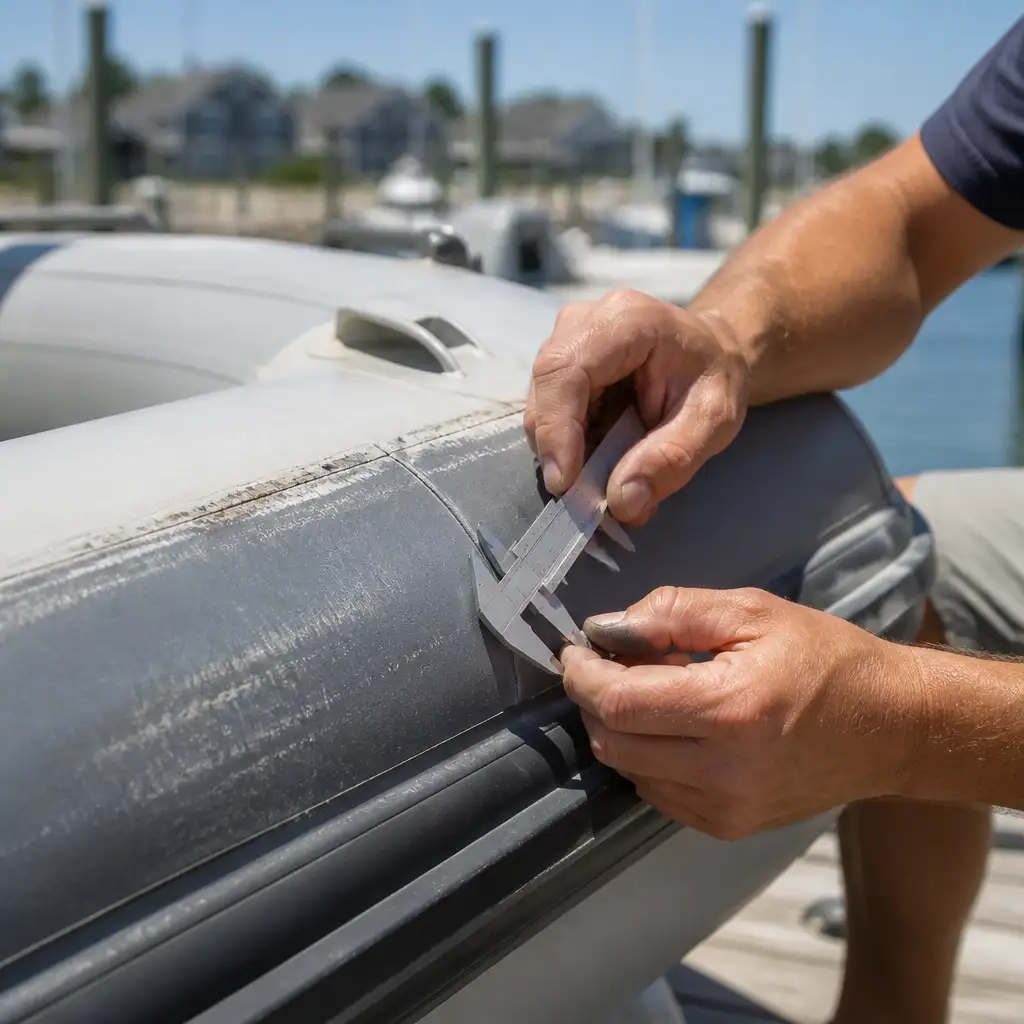
- Abrasion and worn coatings: Scuffs, thinning fabric, or visible base layers where the topcoat has rubbed away. These areas are more likely to sponge, absorb water, or degrade faster once the protective coating is gone.
- Seam separation: Partial openings along glued or heat-welded seams that produce slow leaks, often intermittent with temperature changes or load.
- Patch failures: Previous repairs that lift at the edges, bubble, or lose flexibility. Patches that were applied with incompatible adhesives or without proper preparation may fail prematurely.
Recognizing which failure you’re dealing with is the first step toward deciding whether a localized PVC inflatable boat repair is sufficient or whether tube replacement is the more logical investment.
Why abrasion and chafe accelerate on Nantucket
Nantucket’s coastal conditions combine frequent docking, sand and grit in shallow approaches, and UV exposure. These increase mechanical wear on a tender’s tubes more quickly than quieter inland waters. Typical wear scenarios include:
- Repeated rubbing against transom corners, chocks, or fenders during boarding or when moored alongside tenders and floats.
- Sandy launch areas and tidal flats that embed grit in fabric softeners and abrade the tube surface when you inflate/deflate or drag the tender.
- Salt crystals and solar radiation that accelerate surface cracking once the topcoat becomes compromised.
Early signs—fading, surface tackiness, or a localized soft spot—are worth addressing quickly. Professional PVC repairs can patch and area-repair abrasion, but long-term success depends on addressing the root cause of chafe and protecting the repaired area from renewed wear. For material-specific work, consult a shop experienced in PVC repairs such as East Coast Inflatables’ PVC repairs service.
Seam separation and valve-related air loss: causes and detection
Seam separation on PVC tenders can arise from original manufacturing defects, age-related adhesive breakdown, or repeated flexing in the same area. Valve problems also cause slow or intermittent air loss and are often mistaken for seam leaks. Effective detection follows a methodical approach:
- Start with a pressure test at the recommended inflation pressure and let the boat sit for several hours. Note whether pressure loss is constant, worsens overnight, or changes with temperature.
- Perform a soap-solution test, moving methodically across seams, around valves, and over patches. Small bubbling indicates the leak location and helps distinguish seam issues from valve leaks.
- If the leak is elusive, professional leak detection tools and experience can pinpoint hairline seam failures or internal layer delamination that are not obvious visually. East Coast Inflatables provides trained leak diagnosis and valve repair expertise; depending on the diagnosis, repairs range from valve replacement to seam re-bonding or a more extensive restoration.
When valve issues are suspected, the solution is usually straightforward: replace the valve or its seating. Seam separation requires careful surface preparation and the correct PVC-compatible adhesives or weld techniques for a durable repair.
Why patch failures occur and how to evaluate patch longevity
Patches fail for several reasons: poor surface preparation, incompatible adhesives, inadequate overlap, or simply patching on a surface that’s lost structural integrity. Assessing a patch’s likely lifespan requires evaluating both the patch and the substrate:
- Edge adhesion: Lifted, bubbled, or flaking edges indicate inadequate bonding and are a sign the patch may fail under load.
- Flex test: A technician can flex the tube around the patched area to check for micro-cracking or detachment under strain—especially important on tenders that are frequently loaded or left on choppy moorings.
- Material condition: If the surrounding PVC shows chalking, deep cracking, or layer delamination, repeated repairs are only a short-term fix; retubing should be considered.
A well-executed patch on healthy material can restore air retention for many seasons. However, if multiple patches accumulate, or patch edges begin to lift within months, the boat owner should weigh the cost of ongoing repairs against the value and remaining service life of the boat. For guidance about repair economics and long-term solutions, see East Coast Inflatables’ repair and maintenance information.
Realistic outcomes from professional PVC repairs
Professional PVC inflatable boat repair aims to restore reliable air retention and extend tube life with material-appropriate methods. Realistic expectations include:
- Restored air retention: Proper seam repairs, valve replacements, and correctly executed patches can stop leaks and return chambers to near-original performance.
- Extended service life: Addressing localized damage and applying protective topcoats or edge guards can extend tube life, often delaying the need for a full retube.
- Limitations: Repairs cannot reverse advanced material deterioration such as widespread plasticiser migration (where PVC becomes brittle) or severe delamination. In these cases, repeated patching is temporary and retubing becomes the more cost-effective and safer choice.
Typical repair timelines: a focused patch or valve replacement is often a same-day job; seam rework or larger area repairs can take a few days; retubing is a multi-week project depending on parts availability and boat configuration. A professional technician will explain the expected longevity of a repair based on material condition, not just the visible damage.
If the tube material is otherwise in good condition, a quality repair can be expected to last for multiple seasons when combined with proper care. When the fabric shows systemic age-related issues or repair frequency increases, tube replacement is usually the better long-term investment. East Coast Inflatables also helps customers evaluate when tube replacement or retubing is the wiser option through inspection and cost comparison.
Preventive maintenance to extend tube life in a saltwater environment
Good maintenance reduces the frequency of repairs and slows deterioration. Key steps yacht owners should follow around Nantucket include:
- Regular cleaning: Rinse salt and grit after each use and clean with PVC-safe detergents. Avoid harsh solvents that strip protective coatings.
- UV protection: Apply appropriate UV protectants and re-coat according to manufacturer recommendations. Proper UV protection and tube care can greatly slow sun-related degradation—see professional guidance on UV protection and tube care.
- Correct inflation: Maintain recommended pressures. Over- or under-inflation increases flexing at seams and accelerates wear.
- Chafe management: Use fendering and chafe guards where the tender contacts the yacht or dock. Transfer and stow the tender using soft supports to prevent repeated abrasion on the same tube areas.
- Seasonal inspections: Inspect tubes, seams, and valves at season start and periodically. Early detection of small wear spots allows for simple patch repairs rather than larger restoration.
Routine seasonal maintenance paired with UV protection and proper storage between outings will maximize the life of PVC tubes. When you need professional help implementing these practices or want an inspection, East Coast Inflatables offers repair and maintenance services tailored to inflatable boats and RIBs.
Frequently Asked Questions
Q: How long will a professional PVC patch typically last on a yacht tender?
A: A properly prepared and executed patch on sound PVC can last several seasons; longevity depends on tube condition, exposure, and whether the repaired area is subject to repeated chafe. If the substrate shows advanced deterioration, patch life will be shorter and retubing should be considered.
Q: When is retubing preferable to repeated repairs?
A: Retubing is preferable when tubes show systemic age-related problems (brittleness, widespread cracking, multiple failing seams) or when repair costs approach the value of new tubes. Repeated localized repairs on aging material are often a sign that retubing will provide better long-term value and reliability.
Q: Can UV treatments really extend the life of PVC tubes used as yacht tenders?
A: Yes. Using products formulated for PVC and following cleaning and application guidelines reduces UV-driven breakdown of coatings and slows surface chalking and cracking. UV protection is one part of a preventative maintenance plan that includes cleaning, correct inflation, and chafe prevention.
For material-specific questions or to schedule an inspection and realistic repair estimate, a professional evaluation is the best next step.
If your inflatable boat’s tubes are showing their age, East Coast Inflatables can help you determine whether repair or tube replacement makes the most sense. Contact us to discuss your boat and arrange an inspection.