Introduction
Owning a rigid inflatable boat (RIB) on Narragansett Bay means regular exposure to salt, sun, and changing temperatures. Those environmental factors accelerate tube wear if routine care is overlooked. For recreational owners who depend on their RIB for day trips, fishing, or tending a larger yacht, small maintenance actions make the difference between reliable outings and unexpected downtime.
This article provides a practical, season-focused RIB maintenance checklist tailored to the realities of Narragansett Bay: how to set and check inflation, inspect valves and seams, clean properly after saltwater use, and apply UV protection that suits Hypalon and PVC tubes. Following the checklist reduces premature tube deterioration and helps you prioritize repairs before they become costly.
Throughout the guide you’ll find clear signs that a professional inspection or repair is needed, recommended scheduling intervals, and links to East Coast Inflatables services that support preventive care and repairs for inflatable boats and RIBs. Whether you’re a first-time RIB owner or focused on maintaining an Achilles or Zodiac boat, these steps will help extend tube life and improve on-water reliability.
Why seasonal RIB maintenance matters on Narragansett Bay
Narragansett Bay presents a mix of salt spray, tidal currents, and bright summer sun that accelerates wear on inflatable tubes. Salt deposits and UV exposure break down surface coatings, seams, and adhesives over time. Routine seasonal maintenance helps you identify developing problems—slow leaks, seam separation, or early surface oxidation—before they force you off the water.
Seasonal checks also support safety and reliability. A properly maintained tube retains air pressure longer, provides better flotation, and reduces the risk of sudden soft spots or failures when you’re offshore. These checks are especially important after winter lay-ups, extended periods at anchor, or before holiday weekends when boat use increases.
If you prefer professional assistance, consider scheduling a seasonal inspection. East Coast Inflatables offers focused seasonal maintenance tailored to inflatable boats and RIBs to identify tube issues and suggest appropriate repairs. Learn more about available seasonal maintenance services at https://eastcoastinflatables.com/services/seasonal-maintenance/.
Proper inflation: pressures, chambers, and daily checks
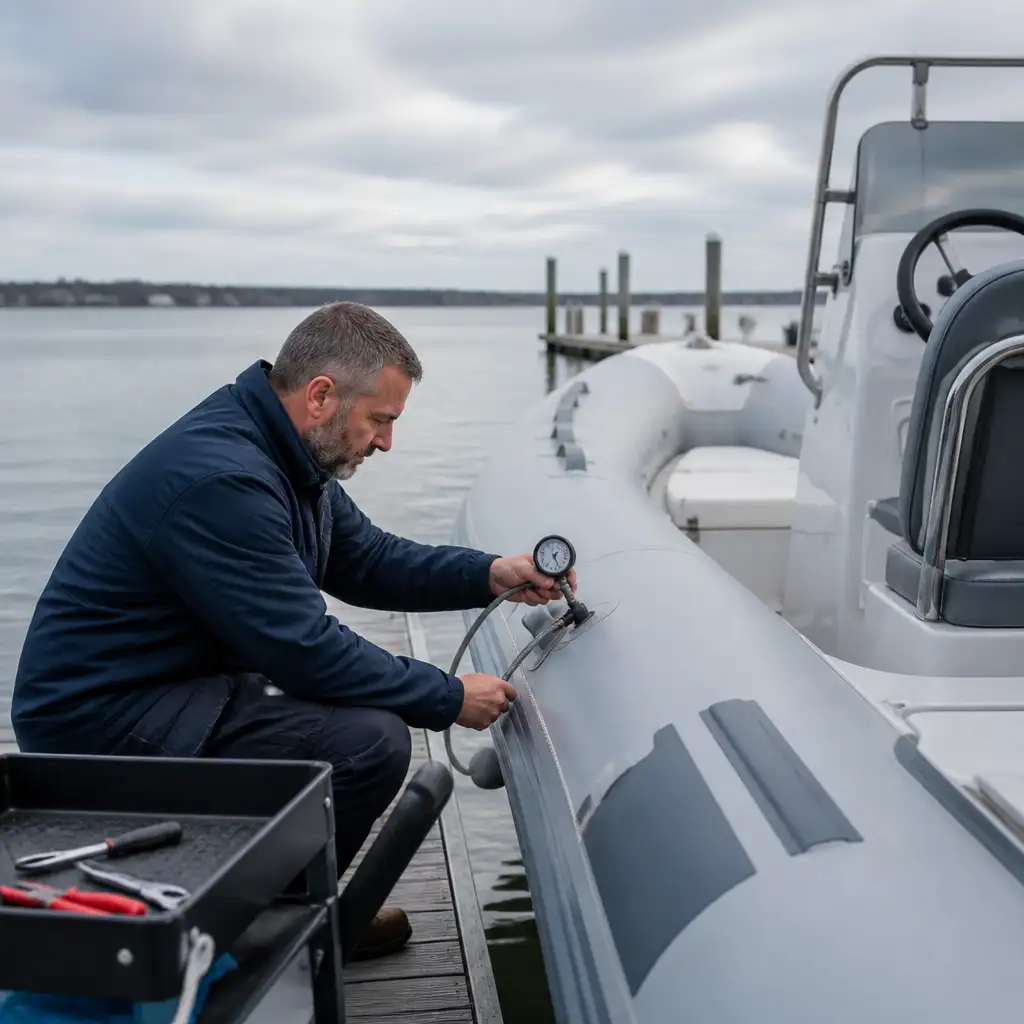
Correct inflation is the foundation of tube longevity. Over- or under-inflation places unnecessary stress on seams and material. Follow the manufacturer’s recommended pressure (check the boat placard or owner’s manual). As a practical rule, keep a reliable gauge and check pressure at least weekly during peak season and before each trip during heavy use.
Tips for inflation checks:
- Use a calibrated pressure gauge rather than relying on feel. Digital or quality analog gauges give consistent readings.
- Check each air chamber separately. Modern RIBs often have multiple independent chambers—maintain the correct balance between them.
- Adjust for temperature: pressure rises with heat and falls in cooler water or air. If your boat sits hot in the sun, check pressure in the morning and after cooling down to avoid overinflation.
- Carry a good pump and spare valve caps. A small leak can often be managed temporarily on the water, but record it and inspect after returning to shore.
Proper inflation improves handling and reduces fabric fatigue. For owners uncertain about the right pressures for their model, manufacturer guidance or a professional check during a seasonal inspection will help you set safe, effective targets.
Valve checks and leak detection techniques
Valves are a common source of slow air loss. Start every season by visually inspecting valve bases and caps for corrosion, cracked threads, or missing O-rings. Tighten loose caps, replace damaged O-rings, and ensure caps seat correctly after inflation.
Simple leak detection you can perform yourself:
- Listen and feel: inflate the chamber to normal pressure, then place your ear close to valve areas and seams while moving slowly around the tube. Feel for air movement with a wet hand where practical.
- Soap-solution test: apply a mild soap solution with a soft brush or spray bottle to suspected areas and watch for steady bubbles. Avoid aggressive cleaners that may damage materials.
- Mark and monitor: when you find a small leak, mark it, re-inflate, and monitor pressure loss over a 24-hour period to determine how rapidly it’s losing air.
If you find a persistent valve leak, or if the source is unclear after home testing, professional leak detection can save time and prevent repeated temporary fixes. East Coast Inflatables specializes in leak detection and valve repairs—schedule an inspection at https://eastcoastinflatables.com/repair-services/leak-detection-valve-repairs/ when needed.
Seam inspection and what to look for
Seams are a structural weak point when tubes age. Inspect seams for discoloration, stiffness, split adhesive, or any flex that seems unusually stiff compared with adjacent material. Pay close attention to high-stress areas: chines, bow seams, and patches from prior repairs.
Inspection checklist:
- Visual check in bright light: look along seam lines for hairline cracks, lifting, or wrinkling.
- Flex test: gently flex the tube along the seam; separation or a crunching sound indicates adhesive or material failure.
- Previous repairs: note older patches—multiple overlapping patches or soft adhesive around a patch often signal a need for professional evaluation.
For any seam damage beyond a small, isolated issue, consult a professional. Repairing seams requires material-specific methods (Hypalon vs PVC), correct adhesives, and controlled surface prep. East Coast Inflatables evaluates seam condition and recommends appropriate repair or retubing options in their repair and maintenance services: https://eastcoastinflatables.com/repair-services/repair-maintenance/.
Cleaning, saltwater care, and safe products
Regular cleaning removes salt, marine growth, and airborne contaminants that accelerate surface breakdown. After each saltwater outing, rinse tubes thoroughly with fresh water. For a deeper clean, use a mild, non-abrasive marine detergent formulated for inflatable materials—avoid household solvents, bleach, or harsh alkaline cleaners that can damage Hypalon and PVC differently.
Practical cleaning routine:
- Rinse: hose the entire tube, inside crevices, and valve areas to remove salt and sand.
- Wash: apply an approved inflatable cleaner with a soft brush or sponge and work in gentle circular motions.
- Rinse again and dry: use microfiber towels to dry seams and valves to reduce trapped moisture that can wick into seams.
- Spot treat: remove bird droppings, grease, and oil quickly using recommended products; prolonged staining can lead to surface breakdown.
If you prefer professional cleaning or have a tube in need of careful restoration before applying protective coatings, East Coast Inflatables provides tube care and detailing specific to inflatables and RIBs. These services prepare tubes for protective treatments that slow deterioration.
UV protection, storage tips, and when to consider retubing
UV damage is a leading cause of tube fading, surface chalking, and eventual material loss. Hypalon and PVC respond differently: Hypalon resists UV better but still benefits from protective treatments; PVC will show faster color loss and may become brittle with long sun exposure.
UV protection and storage guidance:
- Apply a material-appropriate UV protectant annually after cleaning. Use products designed specifically for Hypalon or PVC—incorrect products can harm the material.
- When mooring or trailering, use covers or store the boat out of direct sun when possible. Even short-term shade reduces cumulative UV exposure.
- Inspect treated tubes seasonally for tackiness or film breakdown and reapply protectant according to product instructions.
If tubes are extensively faded, have surface flakes, or show cracking, discuss professional UV protection and tube-care options. East Coast Inflatables offers specialized UV protection and tube-care services that use appropriate products and application methods for inflatable materials: https://eastcoastinflatables.com/repair-services/uv-protection-tube-care/.
When to consider retubing: retubing becomes the right choice when multiple seams fail, large areas of the tube are deteriorated, or repeated repairs are no longer durable. A professional inspection will clarify whether retubing or targeted repairs provide better long-term value.
Frequently Asked Questions
Q: How often should I schedule professional seasonal maintenance for my RIB?
A: At a minimum, schedule a seasonal inspection at the start of each boating season. If you use your RIB frequently, after extended offshore trips, or notice pressure loss or visible damage, arrange an additional midseason check. Seasonal inspections identify developing issues before they become major repairs.
Q: I have slow air loss but can’t find the leak—what should I do?
A: Slow leaks can come from valves, seams, or hard-to-find punctures. Do basic soap-solution testing first; if the source remains unclear or loss is rapid, schedule professional leak detection. East Coast Inflatables specializes in locating leaks and performing valve repairs when appropriate: https://eastcoastinflatables.com/repair-services/leak-detection-valve-repairs/.
Q: What signs mean my tubes need professional repair or replacement rather than a DIY patch?
A: Seek professional service if you see seam separation, multiple or recurring patch failures, large abrasions exposing fabric layers, persistent valve or base damage, or if the material is brittle or flaking. A trained inspection will determine whether targeted repairs, retubing, or other maintenance is the most cost-effective solution. Learn more about repair and maintenance options at https://eastcoastinflatables.com/repair-services/repair-maintenance/.
Routine inspections and preventative maintenance can help extend the life of your inflatable boat. Contact East Coast Inflatables to learn about seasonal maintenance services and tube care.