Introduction
Choosing the right material for your yacht tender’s tubes matters more than many owners realize—especially for tenders used in saltwater around Southeastern Massachusetts, Cape Cod, and Narragansett Bay. Hypalon and PVC behave differently under UV exposure, salt spray, abrasion, and repair cycles. Those differences affect durability, maintenance needs, repair options, and whether repeated fixes or a full retubing makes the most sense.
This article is written for tender owners, yacht crews, and marina managers who rely on inflatable tenders for daily use, guest transport, and short coastal runs. You’ll learn how to identify Hypalon versus PVC, what each material tolerates best, typical repair expectations, and practical tube-care steps that slow deterioration in a saltwater environment.
We’ll also explain an owner-focused inspection checklist and when to schedule a professional evaluation so you can make informed decisions about repair versus tube replacement. The guidance here supports safe, reliable tender ownership and realistic long-term planning for boats operating on the South Coast, Cape Cod, and nearby waters.
How to identify Hypalon vs PVC on your tender
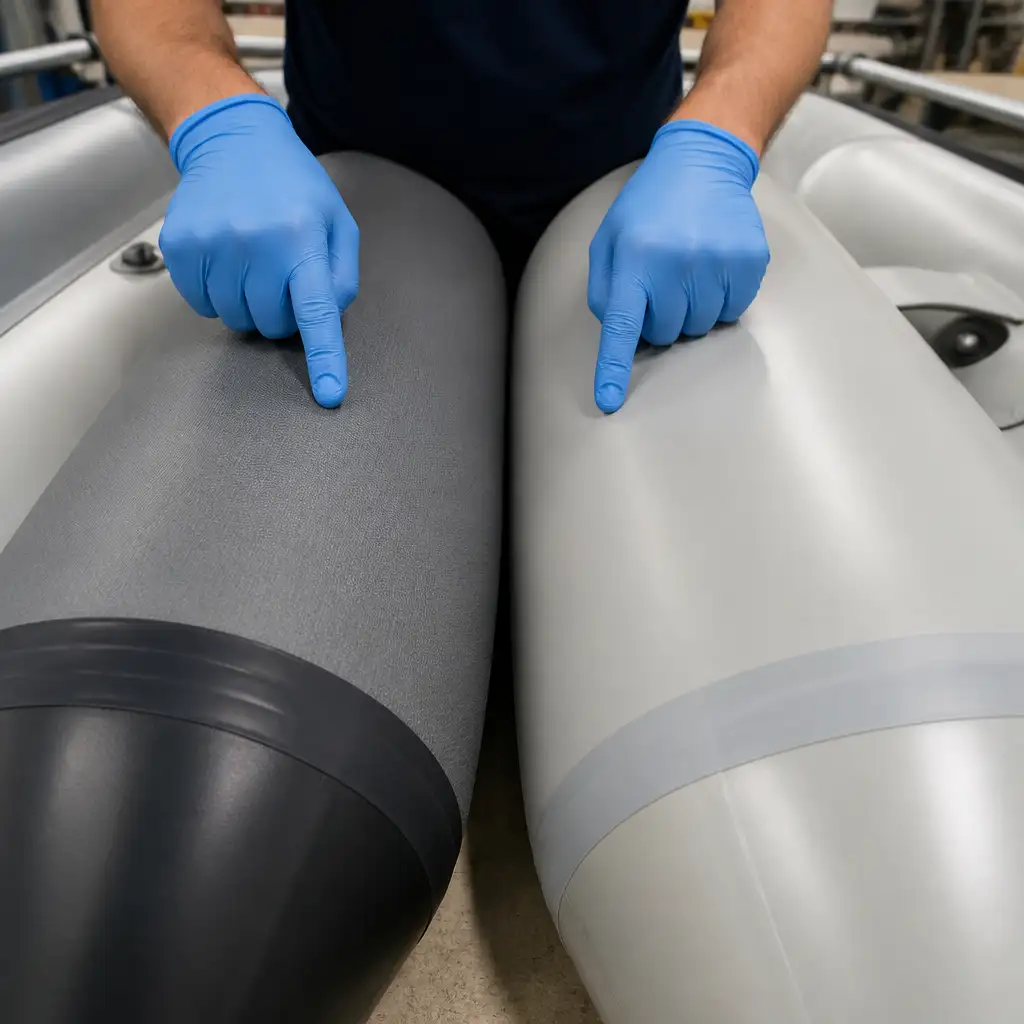
Knowing which material your tender tubes are made from is the first step in setting expectations for durability and repair. Visual checks and a few simple tests often make identification straightforward:
- Surface texture and appearance: Hypalon (a brand name for CSPE) usually has a matte, slightly rubbery surface and a fabric-like weave when inspected at close range. PVC surfaces are typically glossier and may look more plastic-like under bright light.
- Valve and seam style: Older Hypalon tenders often have glued seams using solvent-based adhesives and different valve styles than many factory-welded PVC boats, which frequently use heat-welded seams. However, construction methods can vary by manufacturer and model.
- Age clues: If the tender is over 15–20 years old and shows a soft, matte tube with thin topcoat wear, it’s more likely Hypalon. Many newer, lower-cost tenders are PVC; premium tenders from Zodiac and Achilles often use Hypalon or high-grade neoprene composites.
- Professional identification: When in doubt, have a specialist confirm the material. East Coast Inflatables can perform material identification and recommend appropriate care or repair options; for Hypalon-specific service see our Hypalon repairs page.
Correct material identification matters because repair adhesives, patch methods, and UV protection products differ between Hypalon and PVC. Using the wrong repair approach can make a small problem worse.
Durability differences in saltwater: abrasion, UV, and chemicals
Saltwater operation places unique stresses on tender tubes: abrasive dock lines and fenders, brackish spray, stronger UV exposure on exposed decks, and the occasional chemical contact (cleaners, fuels during refueling). Here’s how Hypalon and PVC commonly perform in these conditions:
- UV resistance: Hypalon outperforms standard PVC for long-term UV stability. Hypalon’s topcoats resist fading and cracking longer, which is why it’s often recommended for tenders left on davits or used frequently on sunny days around Cape Cod. PVC can be more susceptible to UV-induced brittleness unless it has a robust UV-stabilized topcoat.
- Abrasion and puncture tolerance: Both materials can puncture, but Hypalon typically resists abrasion better and will scuff rather than crack under repeated rubs. PVC can be engineered thick enough to be very abrasion resistant; however, cheaper PVC layups will show wear sooner.
- Chemical exposure: Neither material should be exposed to solvents, strong degreasers, or prolonged fuel contact. Small spills should be rinsed promptly with fresh water. For any chemical contact concerns, follow manufacturer guidance and contact a repair specialist when in doubt.
These differences explain why many owners of yacht tenders in saltwater environments prefer Hypalon for its predictable longevity and proven UV resistance, while PVC remains a solid option for owners prioritizing lower initial cost and lighter weight.
Repairability: what repairs work best for Hypalon and PVC
Both Hypalon and PVC can be repaired, but successful repairs require material-appropriate techniques. Understanding typical repair types helps owners set realistic expectations.
- Punctures and small cuts: Small punctures are commonly and effectively repaired in both materials. Hypalon repairs use solvent-based adhesives and careful surface preparation; PVC repairs generally use pressure-sensitive adhesives or hot-welding techniques depending on the fabric. If you have a PVC tender, see our PVC repairs page for details on common fixes.
- Seam failures: Seam separation can occur with either material. Hypalon seams are frequently reglued and reseamed; PVC seam repairs sometimes require patching or heat welding and may be more sensitive to prior repairs.
- Abrasion and rubbed-through areas: Hypalon often takes patches better because the material underneath remains more stable. Deep abrasion through the topcoat on old PVC can indicate substrate deterioration that limits repair longevity.
- Valve and chamber repairs: Valves can be serviced on both materials; leak detection and valve repair are specialized services and should be handled by experienced technicians to avoid introducing new leak paths.
Because repair methods differ, professional evaluation is important. If you’re unsure whether to patch or plan for more extensive work, a professional inspection provides an honest assessment tailored to your boat’s material and condition.
Inspection checklist: what owners should look for and when to act
Routine inspections let you catch developing problems while repairs remain practical. Use this owner-friendly checklist before each season and after any hard use in tide-swept harbors or around pilings:
- Visual topcoat check: Look for cracking, crazing, color loss, or a chalky surface. Significant topcoat failure on PVC often precedes more serious substrate breakdown.
- Seam and glue line inspection: Identify bubbling, peeling, or soft spots along glued seams. These areas can widen quickly in salt spray and should be evaluated by a repair shop.
- Valve stability and pressure check: Inflate to recommended pressure and monitor for slow loss. Slow leaks often originate at valves or valve seats.
- Fabric feel and flexibility: Hypalon should feel flexible even as it ages; brittle or stiff sections on either material suggest age-related breakdown.
- Abrasion zones: Check rubbing strakes, boarding areas, and points that contact chocks or davits. Localized wear may be repairable; widespread abrasion might push you toward retubing.
When inspections reveal multiple damaged areas, widespread topcoat failure, or repeated leak repairs, schedule a professional evaluation. East Coast Inflatables offers repair and maintenance assessments and can advise on realistic repair outcomes for both Hypalon and PVC in saltwater use. For general maintenance resources, our repair and maintenance page explains common seasonal checks.
Repair vs retubing: realistic outcomes and cost considerations
Owners often face the repair-versus-retubing question after a decade or more of use, or following repeated repairs. There’s no one-size-fits-all answer; decisions depend on boat value, tube condition, age, number and location of failures, and intended future use.
Consider these practical guidelines:
- Single, isolated damage: If damage is limited to one or two localized areas (punctures, small cuts, or valve replacement), proper material-specific repairs can restore reliable service at a fraction of retubing cost.
- Multiple or recurring failures: Repeated patching in multiple locations, extensive seam problems, or general topcoat breakdown often means diminishing returns. Retubing restores full tube integrity and can be more cost-effective long-term when repair frequency rises.
- Age and appearance: Tubes with advanced age—especially PVC that has lost topcoat protection or Hypalon with extensive surface deterioration—may look and perform poorly even after repairs. Retubing brings a like-new appearance and improved resale value for the hull.
- Operational needs: Yacht tenders used frequently for guest transfers or commercial-like tasks demand reliability. If downtime or unpredictable leaks would be costly, leaning toward retubing sooner can be prudent.
East Coast Inflatables performs realistic inspections and cost comparisons to help owners decide. We never recommend retubing unless it’s practical and justified by the boat’s condition—our goal is to extend usable life when repair is sensible and recommend replacement where it offers true value. If you’re weighing options, contact us to arrange an inspection and estimate.
Care and maintenance for both materials in Southeastern Massachusetts
Saltwater care routines lengthen tube life for both Hypalon and PVC. Apply a consistent, material-appropriate program focused on cleaning, UV protection, correct inflation, and seasonal checks.
- Freshwater rinsing: After every saltwater outing, rinse tubes and fittings with fresh water to remove salt and prevent crystallization that accelerates abrasion and topcoat wear.
- Gentle cleaning: Use non-abrasive cleaners formulated for inflatable materials. Avoid harsh solvents or household degreasers. For professional products and application guidance, see our UV protection and tube care page for recommended approaches.
- UV protection: Hypalon and modern PVC benefit from UV-protective treatments, but use only products specified for the material. Regular reapplication through the season reduces fading and cracking.
- Proper inflation and storage: Maintain recommended pressures—underinflation increases flexing and seam stress; overinflation risks seam stress in heat. When stowed ashore, keep tubes out of direct sun and ventilated. Avoid compressing tubes tightly against sharp objects.
- Seasonal professional inspection: An annual inspection before the heavy-use season can detect valve wear, slow leaks, and seam issues before they escalate. East Coast Inflatables offers seasonal maintenance to evaluate these items and recommend targeted care.
Consistent care slows deterioration and keeps your tender reliable for passenger transfer and tendering tasks around harbors from New Bedford to Nantucket.
Frequently Asked Questions
Q: How can I tell if a small patch will hold or if tubes need retubing?
A: A single, clean puncture in otherwise healthy tube fabric is often repairable with a patch that will hold long-term. Multiple patches, widespread topcoat failure, seam separation, or age-related brittleness indicate that retubing may be the better long-term investment. Schedule a professional inspection to get a materials-based recommendation.
Q: Does Hypalon require different cleaners than PVC?
A: Yes. Hypalon tolerates specific solvent-based cleaners used by professionals, while PVC generally requires non-solvent cleaners and different protectants. Always use products labelled for the material on your tender, and consult a repair specialist if unsure.
Q: When should I book a professional inspection after noticing a slow leak?
A: Book an inspection as soon as a slow leak is confirmed or if you notice pressure loss that repeats after patching. Slow leaks can come from valves, seams, or hidden punctures; a professional leak-detection service will locate the source and recommend repair or retubing options based on material condition.
Unsure whether your inflatable boat is Hypalon or PVC? East Coast Inflatables can identify the material and recommend the appropriate repair methods after inspection. Contact us to schedule an evaluation.